USS Ford Carrier Sewage System Failures Affect Operations and Morale
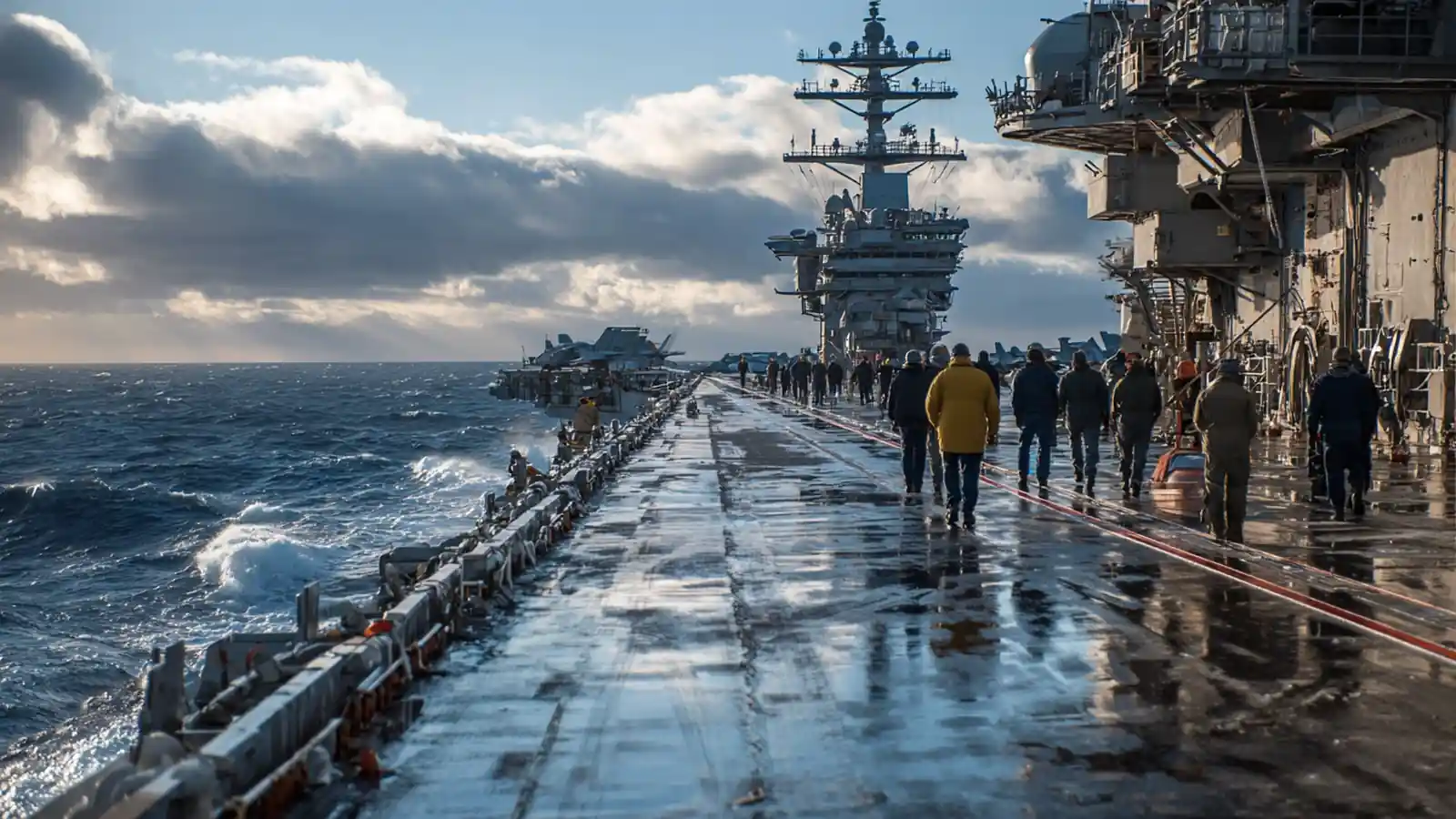
The USS Gerald R. Ford (CVN-78), the newest U.S. nuclear-powered aircraft carrier, has drawn attention due to repeated sewage system malfunctions during its Mediterranean deployment. Reports indicate that nearly 90 percent of the ship’s toilets became clogged at one point, leading to long queues among sailors and affecting daily routines. Maintenance costs have been described as unusually high, and while the U.S. Navy states that combat readiness remains unaffected, the extended logistical strain has reportedly influenced crew morale and operational efficiency. This article summarizes the technical, logistical, and morale-related aspects of the situation.
Event Overview
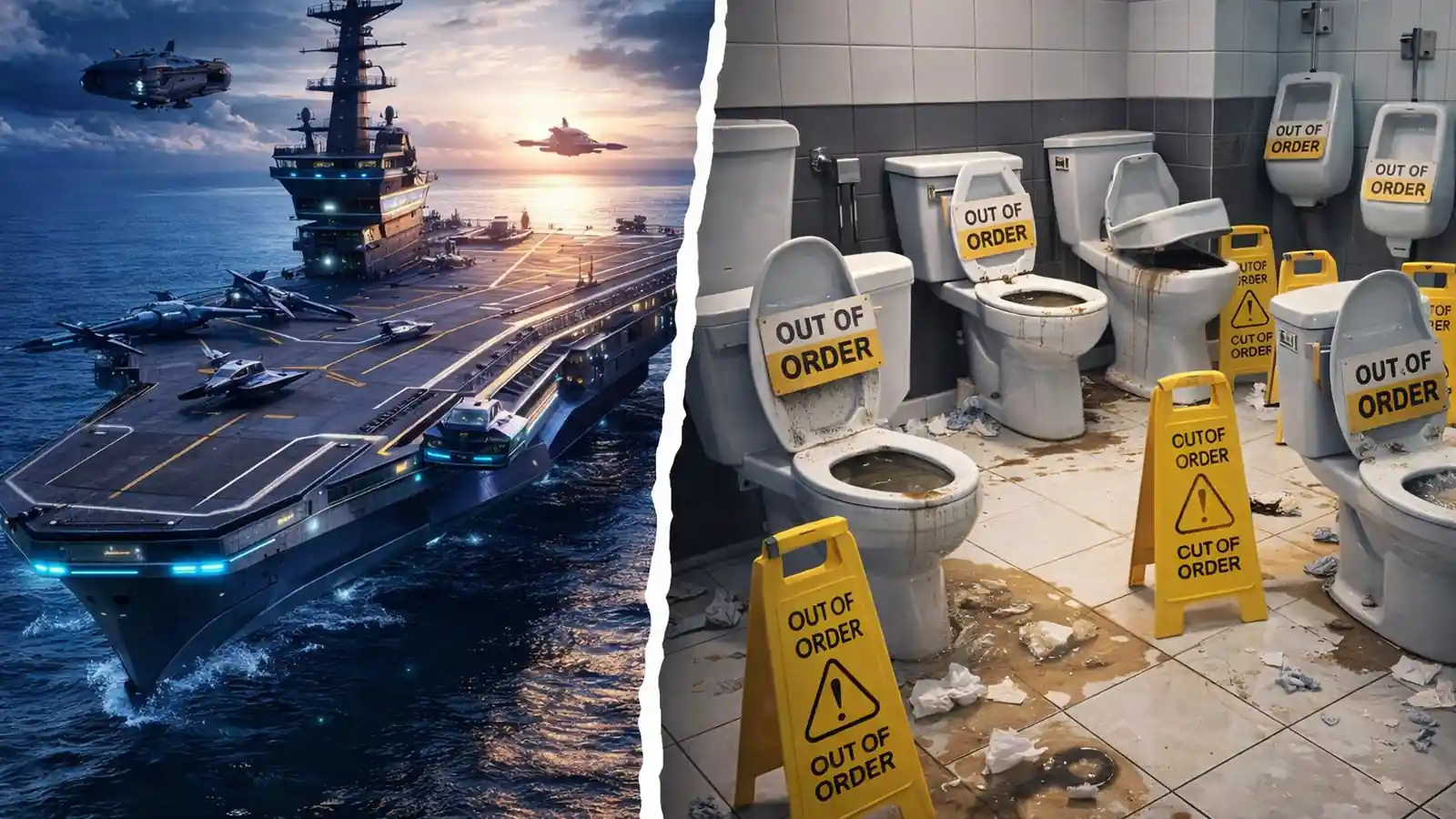
The USS Gerald R. Ford, commissioned as the lead ship of its class, represents one of the most expensive warships ever built, with a construction cost exceeding 13 billion USD. During its deployment in the Mediterranean Sea, the carrier encountered recurring sewage system failures that disrupted onboard operations. According to reports, approximately 90 percent of the 650 toilets on board were affected by blockages, forcing crew members to queue for bathroom access. While the issue may appear minor compared to combat systems, it significantly influenced daily living conditions and operational tempo aboard the vessel. The Navy’s acknowledgment of the malfunction underscores its relevance to both technical reliability and human factors aboard modern carriers.
System Malfunction Details
The sewage system on the Ford-class carrier relies on a Vacuum Collection, Holding, and Transfer (VCHT) design, similar to systems used on cruise ships and submarines. However, the ship’s high occupancy and continuous operations have placed exceptional stress on the system. Engineers reported that the narrow pipeline structure and high-frequency use contributed to repeated blockages. Within a span of just four days, 205 clogging incidents were documented, reflecting the scale of the challenge. The Navy reportedly requested external technical assistance 42 times since 2023, with 32 of those requests occurring in 2025 alone. These figures indicate that the issue persisted even after multiple repair attempts, suggesting a deeper structural or capacity-related problem.
Repair Efforts and Cost
Maintenance of the sewage system has proven both time-consuming and costly. Each acid flush operation—performed when the ship docks—costs approximately 400,000 USD. Sources indicate that at least ten such cleaning procedures have been carried out since the problem was first identified. The ship’s maintenance division organized 19 rotating teams dedicated to handling plumbing and sanitation issues around the clock. Each repair session typically required between 30 minutes and two hours of system downtime, temporarily affecting onboard sanitation availability. The cumulative cost and time investment highlight the logistical burden of maintaining advanced but sensitive shipboard systems under continuous deployment conditions.
Structural and Design Issues
The U.S. Government Accountability Office (GAO) has noted that the sewage pipeline network on the Ford may be undersized relative to the ship’s capacity and usage demands. The shipbuilder reportedly offered temporary mitigation measures but stated that a full redesign would require additional funding and shipyard time. Structural limitations such as pipe diameter and vacuum pump capacity appear to constrain the system’s performance. Similar issues were previously observed on the Nimitz-class carrier USS George H. W. Bush, indicating a recurring challenge in adapting vacuum-based waste systems to large-scale naval platforms. These findings point to broader questions about the balance between technological innovation and proven reliability in naval engineering.
Deployment and Morale Impact
Since June 2025, the USS Gerald R. Ford has remained on overseas deployment for nearly 11 consecutive months, marking one of the longest operational stretches for the crew. The extended mission, combined with frequent maintenance requirements, has placed additional stress on personnel. The ship’s commanding officer publicly acknowledged that the prolonged deployment has posed challenges for both logistics and morale. Crew members reportedly experienced fatigue from repeated repair cycles and limited facilities, contributing to discussions among some sailors about early retirement or reassignment. The situation underscores how technical reliability directly influences human performance, especially in confined and high-stress environments such as aircraft carriers on extended missions.
Public Response and Future Outlook
Official statements from the U.S. Navy emphasize that the sewage malfunction represents an isolated incident and does not compromise the vessel’s overall combat capability. Nevertheless, defense analysts and observers have expressed concern about the logistical load and the implications for future carrier designs. The case has drawn attention to the maturity of newly introduced technologies aboard next-generation warships, particularly regarding life-support and maintenance systems. Discussions in naval forums and technical circles continue to focus on how lessons from the Ford’s experience may guide future design improvements and maintenance planning. For additional background on how technical issues and culture intersect in military and online discussions, readers may refer to related analyses available at MemesBar.